
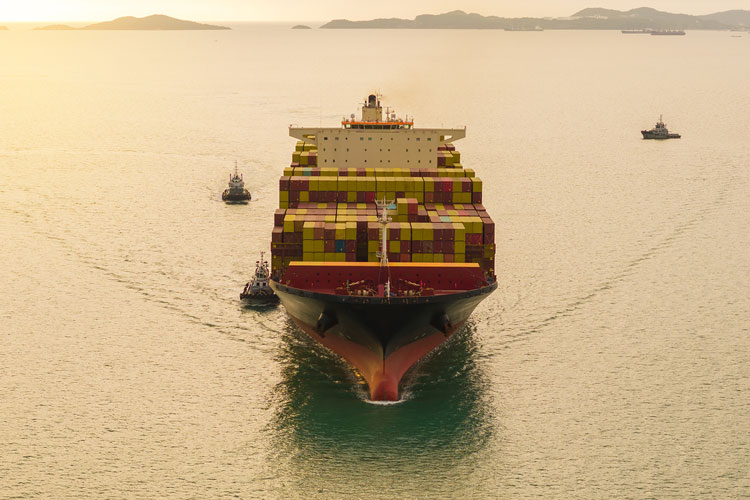
We are writing to keep you fully informed of the rapidly evolving situation in the Strait of Hormuz and its direct impacts on international shipping. The conflict, which escalated from 1 March 2026, has caused the most significant disruption to global maritime trade in recent history. Below, we outline what is happening, what it means for cargo, and the steps being taken across the industry.

Port Conditions
Middle East port operational status
As of 12 March 2026 (source: Inchcape Shipping Services / Lloyd’s Agents). Status may change rapidly.
Suspended
Oman — Salalah
Operations suspended following an attack on 11 March that caused fires in fuel tanks and forced a full evacuation.
Suspended
Bahrain — Khalifa Bin Salman
APM Terminals confirmed suspension 12–13 March on government advice. All gate and berth operations halted.
Suspended
Qatar — Al Shaheen & Halul Island
Both terminals suspended. QatarEnergy has ceased LNG production. Hamad and Doha ports operating normally.
Partially Disrupted
Iraq — Basra
Basra Oil Terminal and SPM Somo Terminal have ceased operations. Two tankers were struck off Basra on 11 March. Umm Qasr undamaged.
Caution Advised
UAE — Fujairah / Khor Fakkan
Fujairah operations resumed but GPS jamming and spoofing warnings active. Containership struck off Jebel Ali 11 March.
Diverted Traffic
Kuwait — Shuaiba
Container vessels bound for Shuaiba with draft ≤9.6m must divert to Shuwaikh. Manifests auto-transferred. Major ports normal.
Operational
Saudi Arabia
Fujairah operations resumed but GPS jamming and spoofing warnings active. Containership struck off Jebel Ali 11 March.
Operational
Jordan, Israel, Lebanon
Container vessels bound for Shuaiba with draft ≤9.6m must divert to Shuwaikh. Manifests auto-transferred. Major ports normal.
Security Incidents
Vessel Attack since 1 March 2026
As of 12 March 2026 (source: Inchcape Shipping Services / Lloyd’s Agents). Status may change rapidly.
01
VESSEL — Massafah-2
TYPE — Tug
DATE — 6 Mar
LOCATION — Strait of Hormuz
INCIDENT SUMMARY — Hit by projectiles while assisting Safeen Prestige. Several crew feared dead.
02
VESSEL — Mayuree Naree
TYPE — Bulk carrier
DATE — 11 Mar
LOCATION — Strait of Hormuz
INCIDENT SUMMARY — Hit by two projectiles. Three crew members still missing.
03
VESSEL — ONE Majesty
TYPE — Containership
DATE — 11 Mar
LOCATION — Ra’s al Khaymah
INCIDENT SUMMARY — Hit by projectile. Damage to hull above the waterline.
04
VESSEL — Source Blessing
TYPE — Containership
DATE — 12 Mar
LOCATION — 35nm north of Jebel Ali
INCIDENT SUMMARY — Hit by projectile. Fire on board. Damage extent unclear.
05
VESSEL — Safesea Vishnu
TYPE — Crude oil tanker
DATE — 12 Mar
LOCATION — Northern Gulf, Basra
INCIDENT SUMMARY — Underwater drone attack. Vessel engulfed in fire but extinguished by Iraqi authorities. Crew evacuated.
Traffic & Transit Data
Strait of Hormuz: traffic has collapsed
77
transit post – 1 March
vs 1,229 in the same period
in 2025
94
reduction in traffic
5.5m dwt vs 111.4m dwt one
year prior
20 mb/d
pre-war oil flow
now collapsed to shadow
fleet only
Source: Lloyd’s List Intelligence / Vortexa. Data through 10–13 March 2026.

Normal Traffic
Post-conflict (All vessel type)
Key finding: Iran-affiliated vessels account for 26% of the limited transits still occurring, with Greece (13%) and China (12%) also represented. The majority of remaining traffic is eastbound (55 eastbound vs 22 westbound), consisting primarily of bulk carriers leaving the Gulf. Only 17 “dark transits” (AIS-off) have been captured — figures expected to be revised upward.

Container Shipping
Impacts on container cargo and supply chains
-
Gulf bookings have been suspended and over 100 ships are trapped as the Strait closes. Cargo is being diverted to Khor Fakkan, Fujairah, Sohar, Salalah, Jeddah, and King Abdullah Port.
-
Landbridge corridors across Saudi Arabia, UAE and Oman are being rapidly deployed as alternatives to sea transit.
-
Congestion is growing across Asian hub ports including Singapore, Malaysia, Colombo, India, Karachi, and Suez as displaced cargo accumulates. Perishable cargo is at serious risk.
-
Gulf food security is directly exposed — the region sources approximately 22% of imports and 52% of cereals via maritime shipping.
-
Carriers have introduced new War Risk surcharges, Emergency Fuel surcharges, and Peak Season surcharges. Cape of Good Hope diversions extend transit times to approximately 49 days, significantly increasing fuel, charter, and insurance costs.
-
Attacks on vessels at anchor or in “safe” ports mean the security risk has expanded beyond the immediate conflict zone.
Energy Markets
Oil supply and the Red Sea response
The International Energy Agency has described this as the largest oil supply disruption in history. Pre-conflict Strait of Hormuz flows of approximately 20 million barrels per day have collapsed to minimal levels. Gulf producers have cut at least 10 million barrels per day of output, with further losses expected if normal shipping does not resume.
Aramco’s pipeline response: Saudi Aramco is routing crude through its East-West Pipeline to Yanbu on the Red Sea coast, bypassing the Strait entirely. The pipeline has a maximum capacity of 7 million barrels per day, of which approximately 5 million are available for export. Yanbu crude loadings have surged sharply since 3 March, primarily for very large crude carriers heading east. Alternative port loadings overall rose by nearly 80% in the week of 2–8 March compared to the prior week, with 6.52 million barrels per day lifted.
Diesel and jet fuel are especially exposed, with limited flexibility in alternative supply chains.
Fertiliser and helium supply chains are also at risk, with potential downstream impacts on agriculture and semiconductor manufacturing.
Bunker fuel availability is tightening, and prices are rising. Vessels are already reducing speeds in anticipation of further supply constraints.
Naval escort proposals remain under political discussion and are not yet an operational reality. Even a best-case scenario would restore less than 10% of normal tanker transits.
Source: Lloyd’s List Intelligence / Vortexa. Data through 10–13 March 2026.
Key Risks Ahead
Escalation Factors To Watch
-
Prolonged closure of the Strait of Hormuz with no clear timeline for resolution.
-
Renewed or expanded Houthi attacks on vessels in the Red Sea and Gulf of Aden.
-
Force majeure declarations from Gulf-region producers and terminal operators.
-
Further US or allied military action that could widen the conflict zone.
Direct Impact on Australia
Domestic fuel surcharges: what this means for you
In addition to the volatile conditions for international shipping, there are immediate and direct effects on the cost and availability of fuel domestically. As a result, our transport contractors have advised that fuel surcharges are changing, and these vary from state to state and by region.
Cable International has held rates to date, but any further increases will be passed on as the charges are received. We are committed to providing you with as much advance notice as possible and will continue to communicate transparently as the situation develops.
If you have any concerns about how these conditions may affect your shipments or cost structures, please do not hesitate to contact our office. Our team is closely monitoring the situation and is available to assist with contingency planning and routing options.
This advisory has been prepared for client information purposes. Data sourced from Lloyd’s List Intelligence Weekly Maritime Risk Briefing, 13 March 2026. Port status and incident data are subject to rapid change — clients are advised to seek updated information before making operational decisions.

